Why Judgment, Above All Else.
To abdicate judgment is not to lose a skill. It is to stop constructing yourself.

At a recent salon dinner where the topic was AI, we got into a healthy debate about what should remain the preserve of humans in the age of AI. We were reflecting on my recent post on dividing the labor where I said that execution goes to the machine, while judgment stays with the human. People agreed broadly with this dichotomy. But someone pushed back on the choice of the word judgment. They said they would have chosen creativity: it’s what makes us human and makes us different from machines.
It was a provocation that got me thinking about what we should claim as ours in this new cognitive division of work, and to dig more deeply into why I believe that should be judgment.
Much time is spent debating what may be exclusively human, and what skills or faculties will or will never be taken away from us. While I have certainly indulged in that debate myself, I am now of the belief, with the unrelenting pace that capabilities continue to improve, that we cannot truly predict this answer. I also think this debate is not worth our focus: it represents a defensive posture in which we humans remain static and passive. Instead I believe we would serve ourselves better by focusing on what we want to proactively claim as ours.
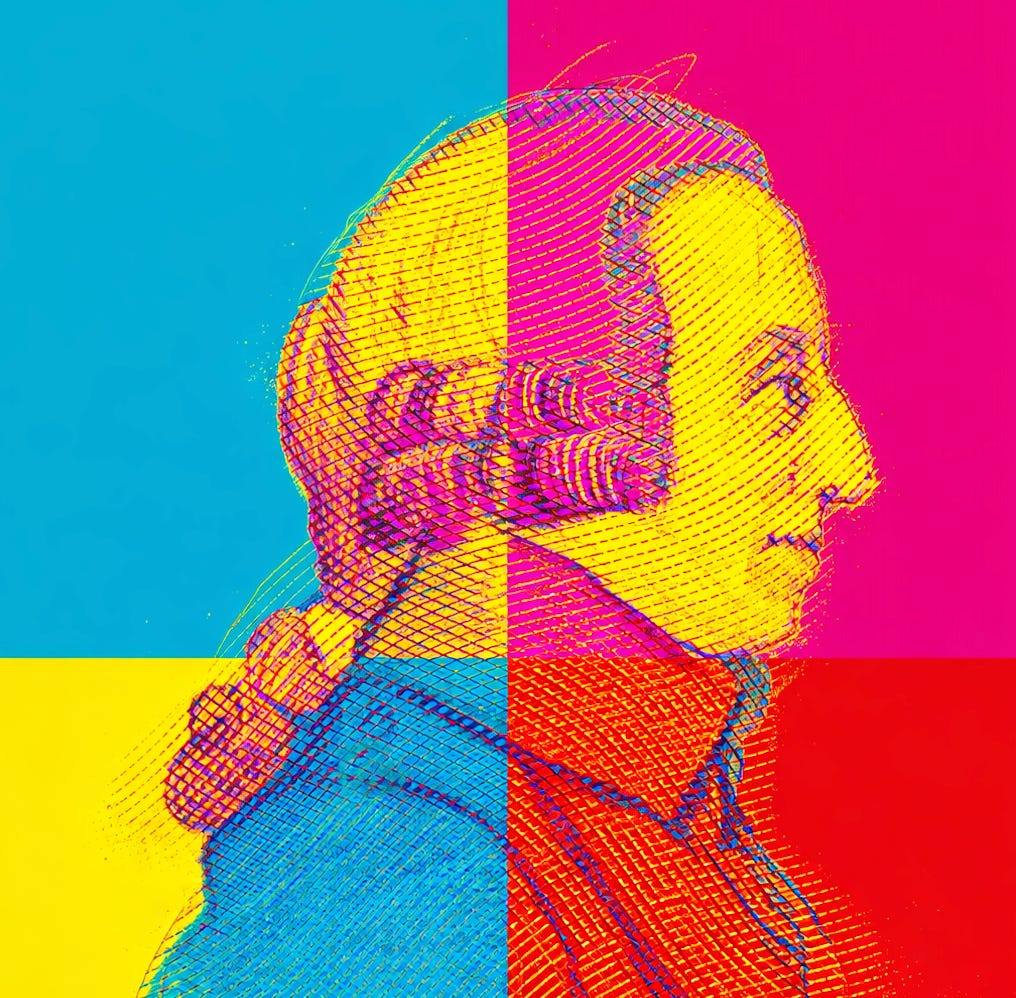
Adam Smith offers us insight into what it is we should claim above all else. Smith called independent judgment the minimum requirement for being considered fully human. Without it, a person cannot form a view of the world, cannot act on that view, and cannot be accountable for the consequences. Independent judgment is what enables you to dance between creativity and reason, context and instinct, and arrive at a position that is your own. But judgment is the governing faculty. All the others ladder up to it.
Judgment is a singular faculty: It must be acquired over time - through interacting with other people, putting your decisions into the world and submitting them to others for censure or approval. We care what others think. We bounce off others - their opinions, their judgment of our opinions, their behavior - and that friction shapes how we see, how we act, and what we decide. Smith argues that a person raised in isolation would have no more sense of their own character than of their own face. Society is our mirror.
And judgment resolves not just in thoughts but in action: with implications for others, with stakes for everyone. You are responsible not just for the thinking but for the acts it informs.
In the new cognitive division of labor, we want to offload to machines what we can, and to enjoy the fruits of that surplus. But this is one we must not. When people defer judgment to AI, a process with no stakes, something fundamental breaks about how judgment is supposed to work. People ask “what should I do?”, accept the answer, come back and ask again. And then the regret: “I should have listened to my intuition.” It is an aberration to allow a process with no skin in the game to decide on behalf of those who bear all the consequences.
Judgment is hard. It takes time, work, interpersonal risk, and missteps. And that is exactly why we shirk it as soon as we are given the opportunity to offload it. AI wants to alleviate us of that pain.
But judgment is the faculty that holds us accountable to each other. Without it, decisions still get made, but no one answers for them. To abdicate judgment is not to simply lose a skill - it is to stop constructing yourself.
And we cannot live with the consequences of outsourcing it, even as it becomes technically more possible. Judgment is the balancing factor of society. The stakes, the accountability: these are what enable an equilibrium to exist among human beings. Outsource that and the equilibrium breaks - not just for you - for everyone.
The machine will keep taking as much as it can. We are the ones who must get active and claim what we want to maintain as ours.